

 Bild 1 von 2
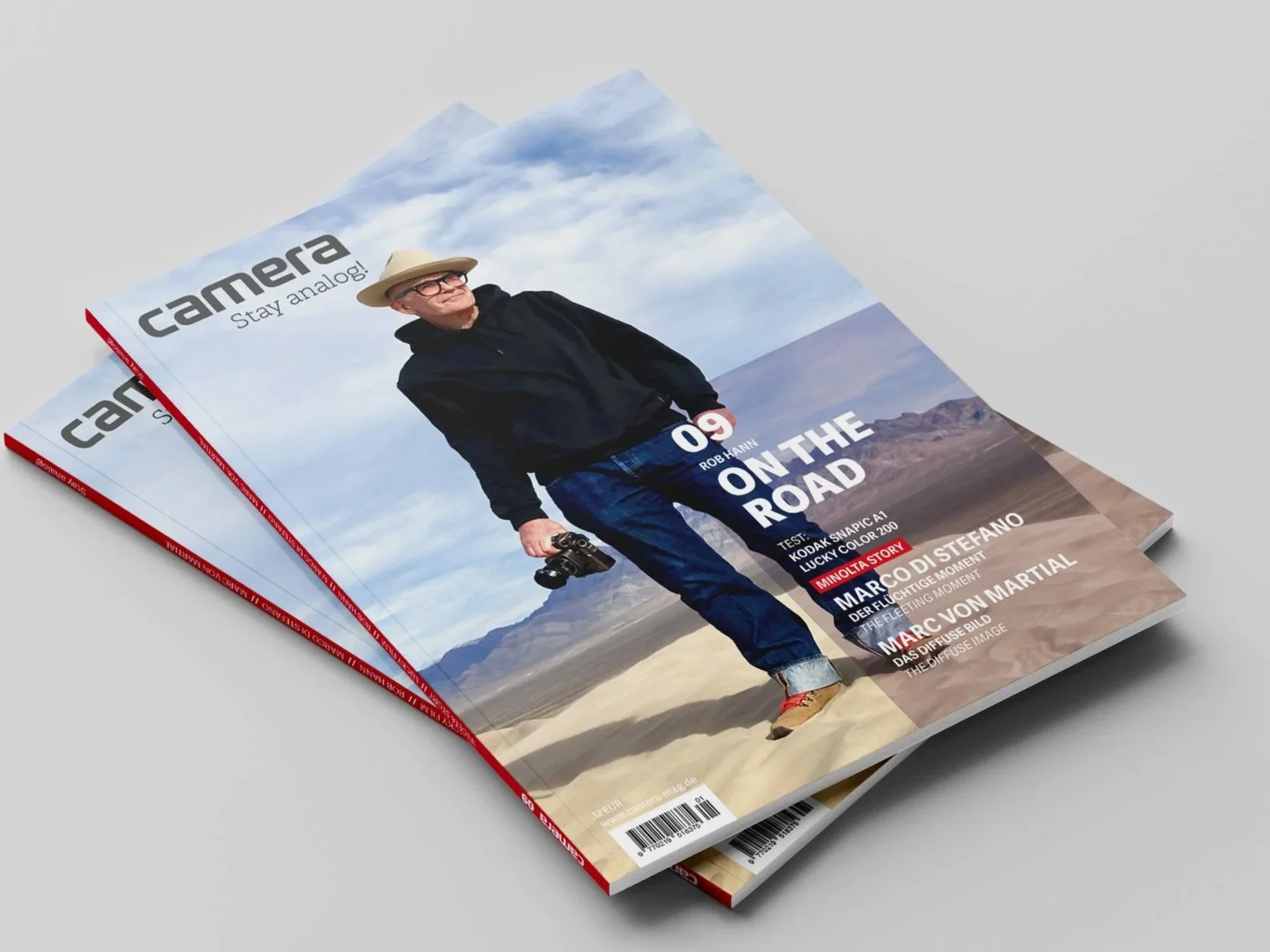 Bild 2 von 2
Magazin is Euro 12, shipping is Euro 5 including sturdy cardboard envelope.
The Topics in camera #09:
A Risky Purchase: Pre-orders
Whether through crowdfunding or pre-orders on their own websites—many producers are trying to raise funds for cameras that aren’t yet on the market. How high is the risk for customers of losing everything they’ve paid? Five current examples.
Review: Olympus mju1 vs. Kodak Snapic A1
How does Kodak’s new 100-euro camera stack up against the legendary Olympus mju1? Jürgen Lossau wanted to find out exactly and shot the same subjects with both cameras.
Test: Lucky Color 200 vs. Kodak Gold
The Chinese company Lucky is entering the European market with two color negative films and two black-and-white films. We’ve already tested the Lucky Color 200 in comparison to the Kodak Gold.
The Minolta Story
Early milestones dating back to 1929, all of the Japanese manufacturer’s million-sellers, five little-known prototypes, advertisements from around the world, and five curious stories from the world of Minolta.
Beautiful boxes—but who’s behind them?
There are around 100 different types of film packaging for color negative film on the market. But only four manufacturers worldwide. So what’s inside which boxes?
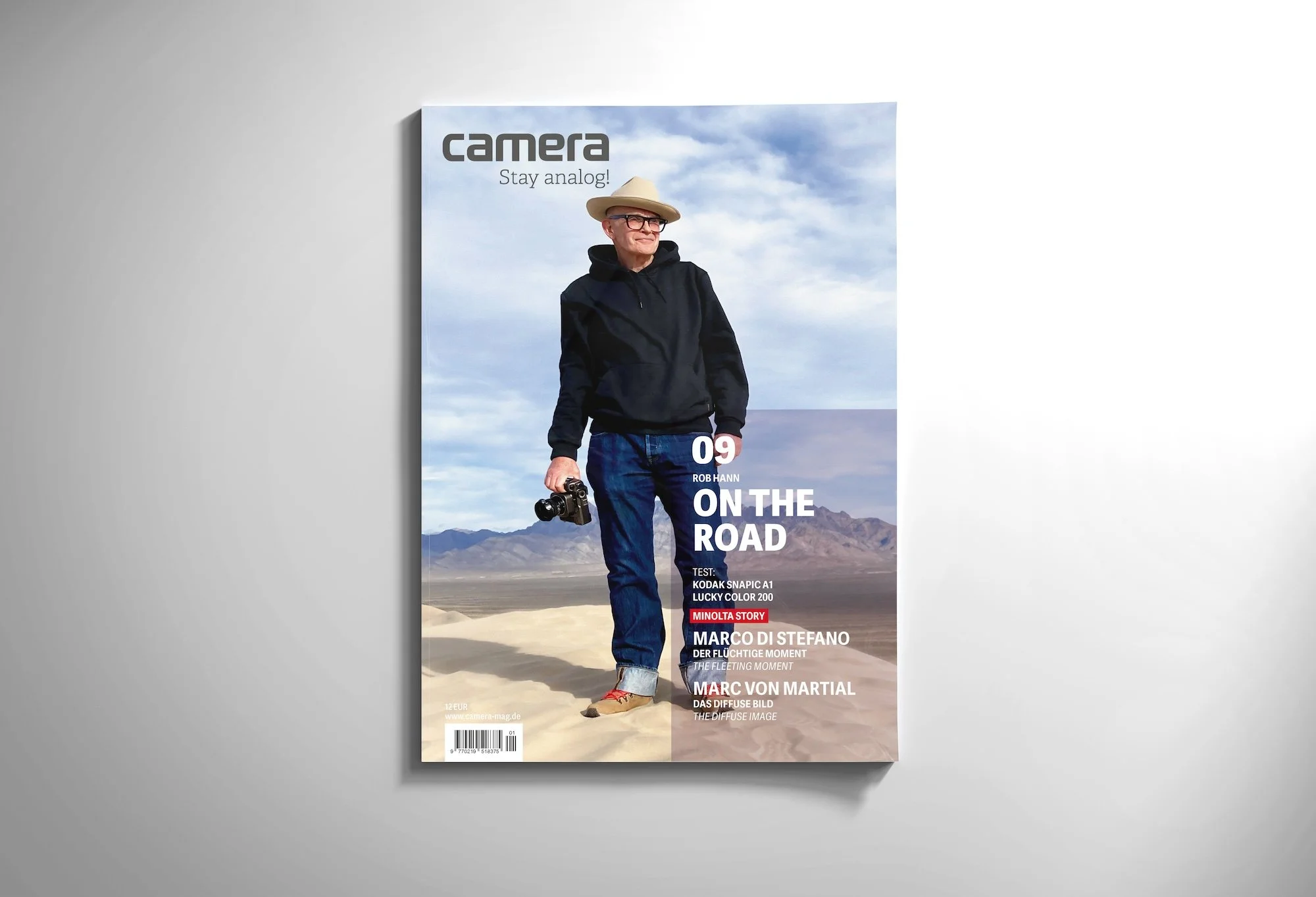
Rob Hann: The Ingenious Wanderer
This British photographer became the cover star of our new issue. He now lives in the U.S. and uses his Mamiya 7 to photograph whatever catches his eye on his travels across the country. And the results are truly magnificent photos!
Painting in Black and White with Colors
Filters enhance grayscale tones and contrasts. Thomas Gade uses sample images to show which wavelengths of light reflected by the subject reach the film. Four different color filters are suitable for black-and-white film.
Marco di Stefano: The Fleeting Moment
How do you capture the perfect fleeting moment with your analog camera? Marco di Stefano takes fashion photos and explains how much work goes into pictures that look as if they were taken by chance.
Does Collecting Also Mean Using?
In his column this time, Friedemann Wachsmuth asks how one becomes a collector of analog cameras and what that means for photography. Do all the cameras get their chance to shine?
Kodak in Australia
Starting in 1961, up to 4,000 people worked at Kodak in Coburg. On the outskirts of Melbourne, they produced cameras, slide projectors, and film. In the second part of our series on Kodak production sites, we present rarely seen images from the factory on the fifth continent.
Marc von Martial: The Diffuse Image
These black-and-white photos look like antique works of art. His photographs are created in medium and large formats—often using expired film. For Marc von Martial, the process of creating an image doesn’t end with taking the photo. Cyanotypes and alcohol pigment transfers are among his favorite post-processing techniques.
Zero Trust in Digital!
In the age of AI and Photoshop, who still believes in the evidential value of photos? We show how analog images can help ensure credibility.
Mainz and Odessa—Double Exposure
A city partnership that also connects through images. Michael Dörr reports on a double-exposure project designed to deepen the friendship between people from two countries.
Advertising from the Past
What Fujifilm came up with to advertise lenses and cameras in the 1970s.
Magazin is Euro 12, shipping is Euro 5 including sturdy cardboard envelope.
The Topics in camera #09:
A Risky Purchase: Pre-orders
Whether through crowdfunding or pre-orders on their own websites—many producers are trying to raise funds for cameras that aren’t yet on the market. How high is the risk for customers of losing everything they’ve paid? Five current examples.
Review: Olympus mju1 vs. Kodak Snapic A1
How does Kodak’s new 100-euro camera stack up against the legendary Olympus mju1? Jürgen Lossau wanted to find out exactly and shot the same subjects with both cameras.
Test: Lucky Color 200 vs. Kodak Gold
The Chinese company Lucky is entering the European market with two color negative films and two black-and-white films. We’ve already tested the Lucky Color 200 in comparison to the Kodak Gold.
The Minolta Story
Early milestones dating back to 1929, all of the Japanese manufacturer’s million-sellers, five little-known prototypes, advertisements from around the world, and five curious stories from the world of Minolta.
Beautiful boxes—but who’s behind them?
There are around 100 different types of film packaging for color negative film on the market. But only four manufacturers worldwide. So what’s inside which boxes?
Rob Hann: The Ingenious Wanderer
This British photographer became the cover star of our new issue. He now lives in the U.S. and uses his Mamiya 7 to photograph whatever catches his eye on his travels across the country. And the results are truly magnificent photos!
Painting in Black and White with Colors
Filters enhance grayscale tones and contrasts. Thomas Gade uses sample images to show which wavelengths of light reflected by the subject reach the film. Four different color filters are suitable for black-and-white film.
Marco di Stefano: The Fleeting Moment
How do you capture the perfect fleeting moment with your analog camera? Marco di Stefano takes fashion photos and explains how much work goes into pictures that look as if they were taken by chance.
Does Collecting Also Mean Using?
In his column this time, Friedemann Wachsmuth asks how one becomes a collector of analog cameras and what that means for photography. Do all the cameras get their chance to shine?
Kodak in Australia
Starting in 1961, up to 4,000 people worked at Kodak in Coburg. On the outskirts of Melbourne, they produced cameras, slide projectors, and film. In the second part of our series on Kodak production sites, we present rarely seen images from the factory on the fifth continent.
Marc von Martial: The Diffuse Image
These black-and-white photos look like antique works of art. His photographs are created in medium and large formats—often using expired film. For Marc von Martial, the process of creating an image doesn’t end with taking the photo. Cyanotypes and alcohol pigment transfers are among his favorite post-processing techniques.
Zero Trust in Digital!
In the age of AI and Photoshop, who still believes in the evidential value of photos? We show how analog images can help ensure credibility.
Mainz and Odessa—Double Exposure
A city partnership that also connects through images. Michael Dörr reports on a double-exposure project designed to deepen the friendship between people from two countries.
Advertising from the Past
What Fujifilm came up with to advertise lenses and cameras in the 1970s.