

 Bild 1 von 2
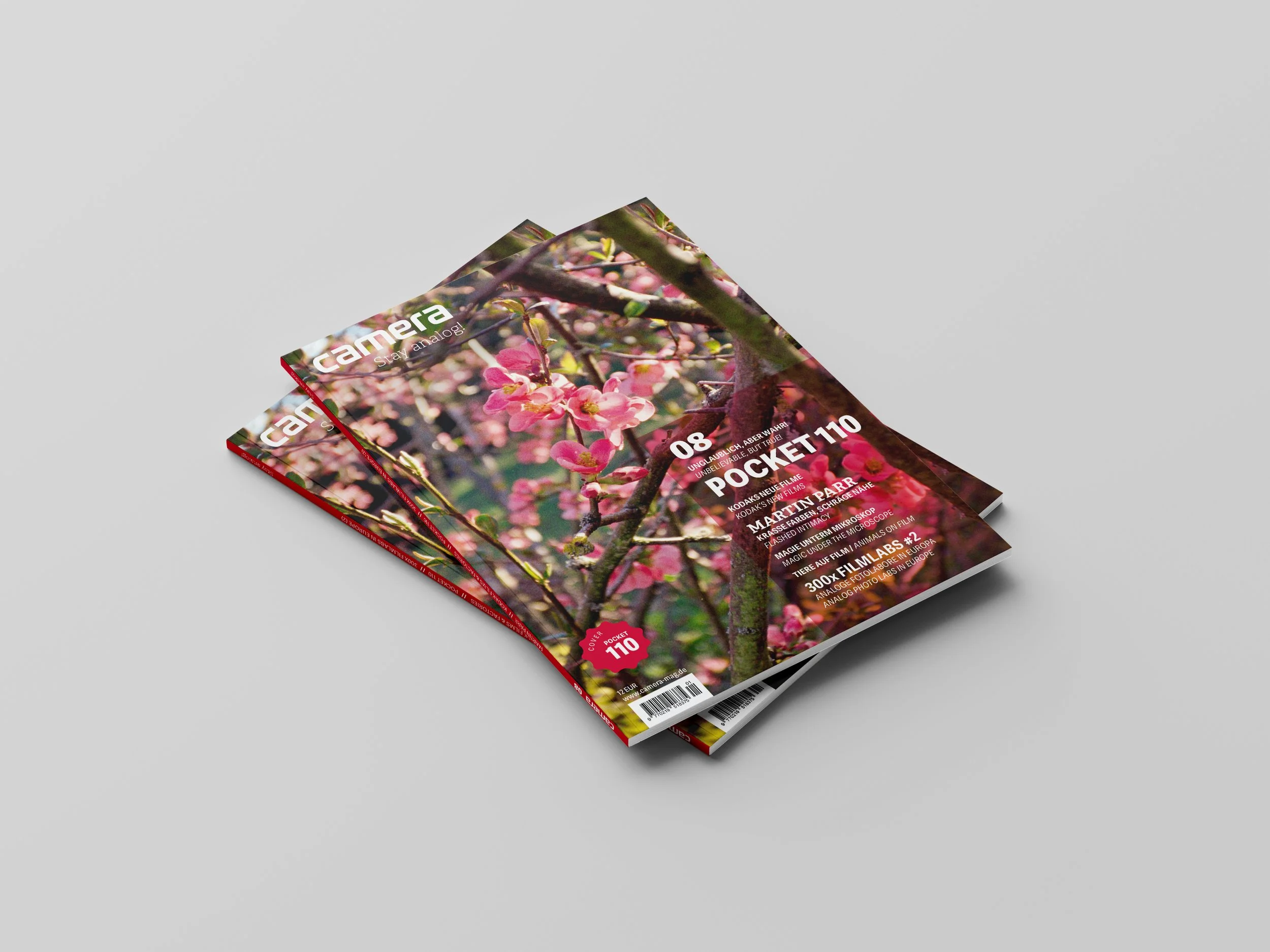 Bild 2 von 2
Magazin is Euro 12, shipping is Euro 5 including sturdy cardboard envelope.
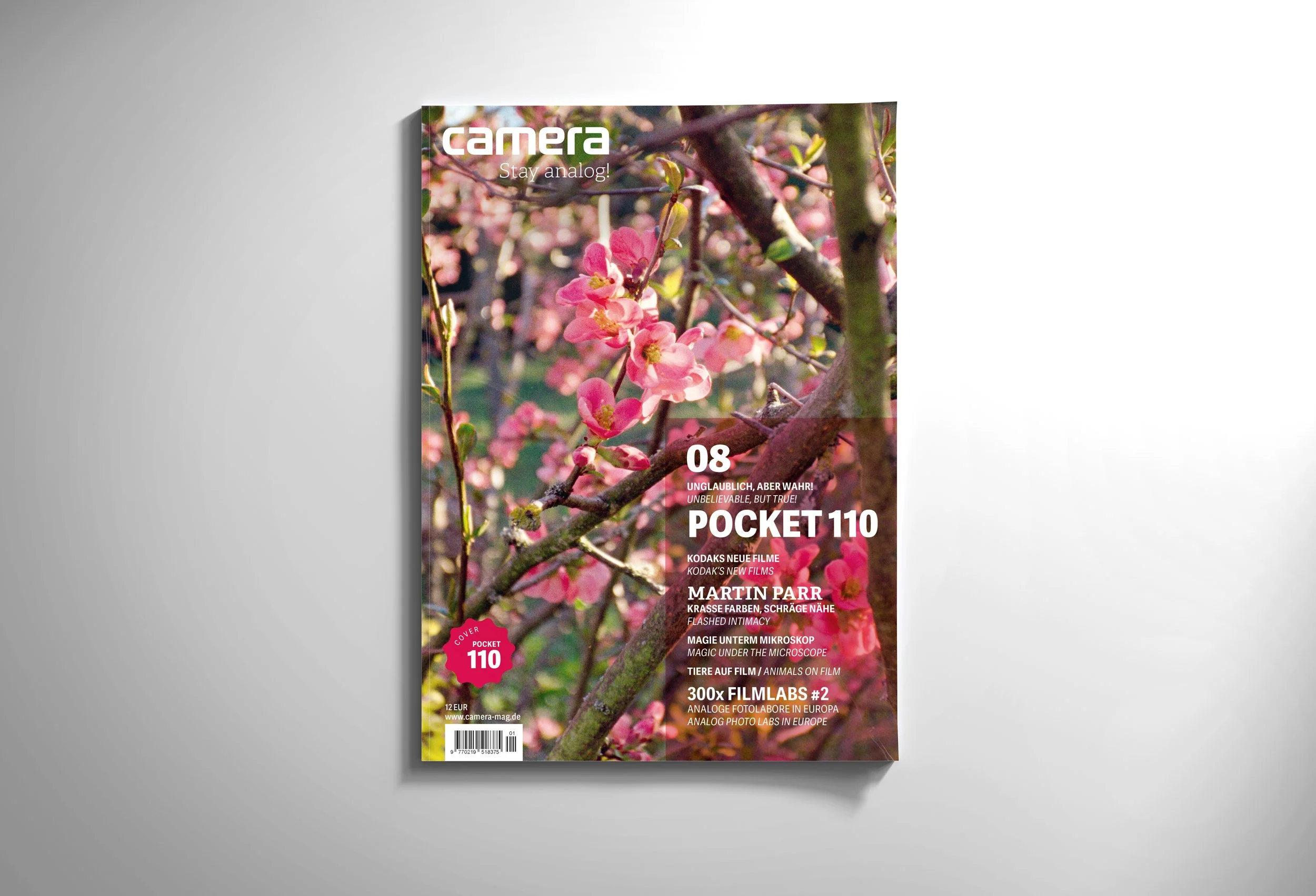
The topics of camera #08:
Is this really a pocket camera?
Pocket cameras are popular again. And there’s no trace left of the poor image quality of the past. That’s because new Lomo films and re-packaged Kodak materials bring more detail and sharpness to the image than before.
The Secret Change in Kodak Films
Suddenly, Kodak films look different—and have different names. At least in many countries. New films are also being introduced. Distribution, which was previously handled exclusively by Kodak Alaris, is now also in the hands of Eastman Kodak. What’s behind this?
Opium Under the Microscope
Photographer Franz Baake created images unlike anything we’ve seen before. Whether it’s all-purpose adhesive, Maggi seasoning, Cointreau liquer, or opium—under polarized light and at high magnification—he took analog photos under the microscope. A whole new world unfolds before our eyes.
Photo Story: The Yellow Giant
camera has delved into archives to showcase Kodak’s once-proud facilities in England, France, and Sweden. Nearly 10,000 people worked there until the early 2000s. They built cameras, produced film, and developed photographs—all starting in 1897.
Parranoia in Great Britain
Martin Parr, the late star among England’s documentary photographers, in a 2015 interview and featuring his best analog images. Also: An in-depth look at Parr’s unique photographic style—intimacy, vivid colors, and contradictory details.
Animals on Film?
Renowned photographer Norbert Rosing has been capturing images of nature and wildlife for many years, most recently often using digital technology. camera asked Rosing: Hand on heart—is analog wildlife photography even feasible anymore? Or should one focus on nature photography?
Görner Photo Lab: The True Analog Pioneers
Here, it’s still possible: photo prints exposed directly from the enlarger onto paper and then developed—no scanning involved. At Dresden’s Görner Photo Lab, a technique has survived that has all but died out among professionals. camera visited Angelika and Thomas Görner in their “palace” in the backyard.
300 Photo Labs in Europe
In the second part of our list of all European photo labs that offer both local service and photo processing by mail, you’ll find another 150 businesses. This time, the list ranges from Poland to the United Kingdom. Our readers can access the labs directly online via QR code.
Scanning Film with a Digital Camera
Expert writer Thomas Gade tests the Valoi Easy35 V2 with several digital system cameras. The device, which handles negatives, slides, and various film formats, is a simple solution for small batches of images.
Why Analog?
Of course, we know why we shoot analog. But psychologist Joachim Feigl has examined the details behind our fascination in a study. It’s interesting to read why we do what we do...
Black-and-White Analog Infrared Photography
Our author Matthias Kistmacher takes us on a journey into a fifth season. His images, captured at a different wavelength, appear surreal and unfamiliar. What techniques does he use, and which films and filters does he employ?
The Truth Is Unromantic
Columnist Friedemann Wachsmuth reflects on the myth of film character. Wachsmuth has been a photography enthusiast for 35 years. His personal comfort zone is the analog world, while his professional career takes place in the digital world. What does he have to say to us?
Magazin is Euro 12, shipping is Euro 5 including sturdy cardboard envelope.
The topics of camera #08:
Is this really a pocket camera?
Pocket cameras are popular again. And there’s no trace left of the poor image quality of the past. That’s because new Lomo films and re-packaged Kodak materials bring more detail and sharpness to the image than before.
The Secret Change in Kodak Films
Suddenly, Kodak films look different—and have different names. At least in many countries. New films are also being introduced. Distribution, which was previously handled exclusively by Kodak Alaris, is now also in the hands of Eastman Kodak. What’s behind this?
Opium Under the Microscope
Photographer Franz Baake created images unlike anything we’ve seen before. Whether it’s all-purpose adhesive, Maggi seasoning, Cointreau liquer, or opium—under polarized light and at high magnification—he took analog photos under the microscope. A whole new world unfolds before our eyes.
Photo Story: The Yellow Giant
camera has delved into archives to showcase Kodak’s once-proud facilities in England, France, and Sweden. Nearly 10,000 people worked there until the early 2000s. They built cameras, produced film, and developed photographs—all starting in 1897.
Parranoia in Great Britain
Martin Parr, the late star among England’s documentary photographers, in a 2015 interview and featuring his best analog images. Also: An in-depth look at Parr’s unique photographic style—intimacy, vivid colors, and contradictory details.
Animals on Film?
Renowned photographer Norbert Rosing has been capturing images of nature and wildlife for many years, most recently often using digital technology. camera asked Rosing: Hand on heart—is analog wildlife photography even feasible anymore? Or should one focus on nature photography?
Görner Photo Lab: The True Analog Pioneers
Here, it’s still possible: photo prints exposed directly from the enlarger onto paper and then developed—no scanning involved. At Dresden’s Görner Photo Lab, a technique has survived that has all but died out among professionals. camera visited Angelika and Thomas Görner in their “palace” in the backyard.
300 Photo Labs in Europe
In the second part of our list of all European photo labs that offer both local service and photo processing by mail, you’ll find another 150 businesses. This time, the list ranges from Poland to the United Kingdom. Our readers can access the labs directly online via QR code.
Scanning Film with a Digital Camera
Expert writer Thomas Gade tests the Valoi Easy35 V2 with several digital system cameras. The device, which handles negatives, slides, and various film formats, is a simple solution for small batches of images.
Why Analog?
Of course, we know why we shoot analog. But psychologist Joachim Feigl has examined the details behind our fascination in a study. It’s interesting to read why we do what we do...
Black-and-White Analog Infrared Photography
Our author Matthias Kistmacher takes us on a journey into a fifth season. His images, captured at a different wavelength, appear surreal and unfamiliar. What techniques does he use, and which films and filters does he employ?
The Truth Is Unromantic
Columnist Friedemann Wachsmuth reflects on the myth of film character. Wachsmuth has been a photography enthusiast for 35 years. His personal comfort zone is the analog world, while his professional career takes place in the digital world. What does he have to say to us?